
Sabrina Das (Maya’s mother, MUWCI 2025–2027)
My 16-year-old daughter arrived last weekend, together with 118 other new students from about 80 different countries, to start her first year of a two-year International Baccalaureate programme at the UWC Mahindra College in India.
The United World Colleges (UWCs) are a group of international schools that offer the International Baccaluareate, but whose USPs are a predominantly scholarship-receiving student population, an intentionally diverse international community, and a mission-based philosophy of education around the values of peace, sustainability and equity. Students are selected by volunteer-led National Committees in each country and nominated to represent their countries at the various colleges.
I started my own UWC journey in 1997 when I applied for the scholarship via the National Committee in Singapore. It took me two days and several planes to arrive in UWC USA, which is in a rural, mountainous location in a state nobody from Singapore had ever heard of – New Mexico.
The Dutch boy who shared my dorm helped me open a Hotmail account. “Hey, will you check if I have any mail?” we would ask our friends who were walking the ten-minute journey down the hill and across a bridge to the post office, handing them the keys to our respective P.O. boxes. Each dorm had a coin-operated public telephone, but most people purchased pre-paid calling cards to call home. I was lucky my mother had set up a free-phone number I could use from any telephone that would reverse the charges to her. She must have spent so much money on my international calls.
It was not an uncommon sight, somebody sat on the floor under the dorm phone, in an intense conversation. I spent more time crying in that phone booth than laughing. Confronting the troubles and trauma in the outside world via phone – illness and death, war and conflict, natural disaster and tragedy – were even more difficult because one was physically so far away. Once you put that phone back on its hook, your world may have changed but you are still in the same place, around the same people, same noises, same smells, with no means to do anything but carry on with the life-things that need doing.
More than a quarter of a century has passed since that time. I returned to campus for my 25-year reunion, held over a weekend last July. The dorms are nearly exactly the same, except the phone boxes have been removed. Many of us alumni, now parents, asked the campus leadership about their “cell phone policy”.
“I struggle to get the Israeli students to turn off their phone notifications that tell them about every airstrike in real time, even when we are having an academic advisory meeting,” one faculty member said, with genuine concern. There is a feeling of responsibility to be aware of current affairs and events, as how can we be active world citizens if we are not? However, faculty and students describe a real feeling of disconnectedness in one’s person and place when our brains and bodies are being torn apart, when our attention is demanded minute-to-minute by messages and notifications from far away.
After the reunion weekend in New Mexico, I spent 7 weeks with my partner on a road trip through the Western United States. I was in an in-between period professionally, and this seemed like a rare opportunity as an adult to re-experience what I took for granted in my teens and 20s – a chance to see, learn and grow through travel. Driving through winding mountain roads in rural Colorado, Wyoming, Idaho and Montana, I went for days at a time with no phone reception and no way to connect with the world outside my immediate vicinity.
We did a challenging 70km backpacking trip in the Tetons over 4 days. Staying warm, hydrating and nutrition was all a challenge, as was the physical feat of covering ground on foot through ascents, descents, terrain and weather. I had no time or capacity to be responsible for meetings, manuscripts, politics, the state of the world, my kids, my house, or anything else apart from my immediate physical and psychological needs.
During this intense period as well as overall in the 7-8 weeks I am spending on the road, sleeping either in a tent or in the back of the truck, I think about what my life is “normally” like. I am constantly being torn apart into a million pieces, with each email or Whatsapp message. Each New York Times or BBC headline sends me into a mini-spiral of helplessness and often hopelessness. It is a wonderful feeling to be free from this, and to recharge through the healing that the wilderness brings. The sound of birdsong, grasshoppers snapping, rivers gushing, and the aspen leaves rustling in the wind. I go to sleep when it gets dark, and wake up at first light. Many cultures and ancient wisdom document the healing and restoration the wilderness can bring.
This brings me a full circle to the UWC, where I first learnt about “leave no trace”, what a “bear bag” is, and how to do a number two in the woods. The wilderness programme at the UWC-USA is still one of the most impactful offerings of the college, with outdoors education featuring as a cornerstone of most UWCs. If nothing else, being on a wilderness expedition forced us to sleep at night, talk to people around us, and to disconnect from the drama of campus as well as events far away.
My daughter and I are transitioning from a relationship of close daily contact to one where contact is restricted by time zones and timetabling. I will no longer get to know about her every bedtime, every English assignment, every class trip. She will need to find alternate sources of emotional support for some things that happen to her. She will need to solve some problems on her own. Children grow up and parents need to too. We have our cellphones and messaging systems, but I am trying to be mindful that every message I send her splits her consciousness even if a tiny bit, and to use this new power of connectivity that the internet brings us with care and intentionality.
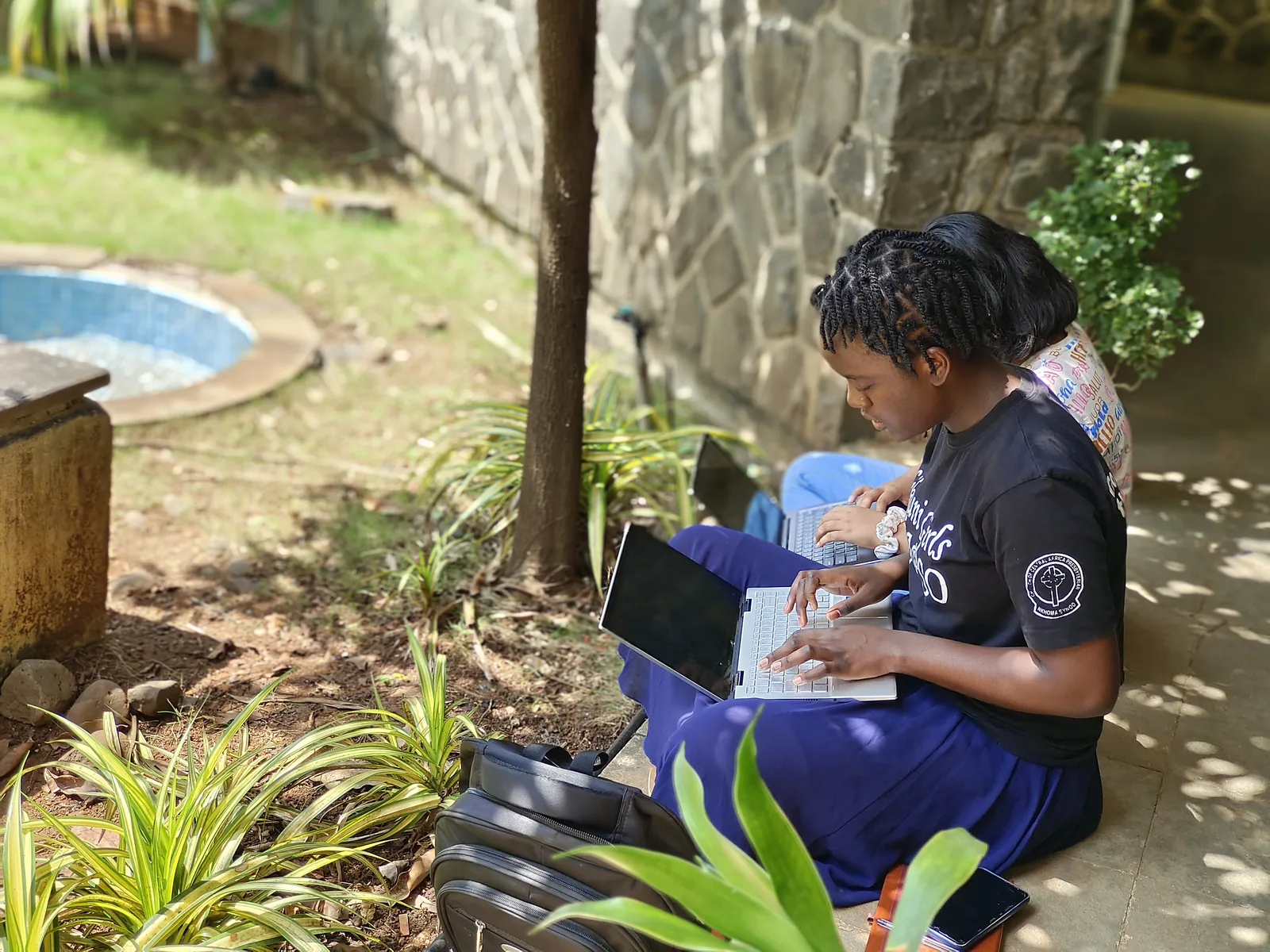
Blog image used for representational purposes.
More stories from MUWCI
This MUWCI Parent Reflection explores the experience of letting go, supporting a child's independence, and finding balance in an age of constant digital connection.